уторак, 3. јануар 2023.

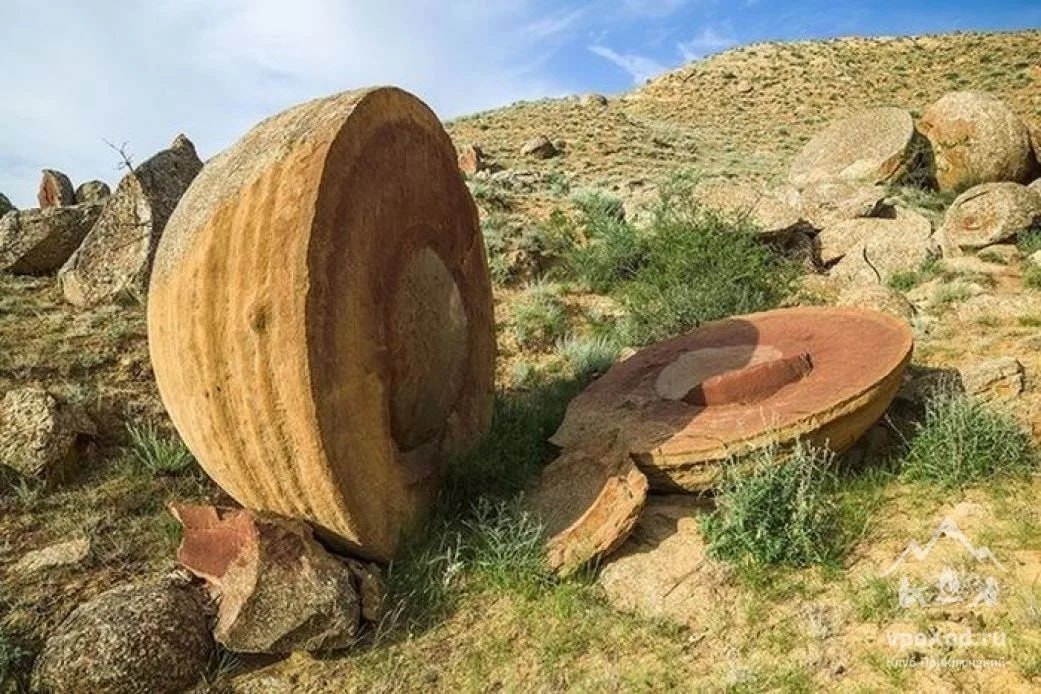
Huge Stone Spheres in Mangistau, Kazakhstan

Huge Stone Spheres in Mangistau, Kazakhstan

It consists of numerous ball-like rock formations strewn across a wide range of steppe land. 

The balls range in size from tiny marble-like rocks to huge boulders the size of a car. 

The phenomenon is poorly researched, but there could be a number of geological explanations: 

  • from megaspherulites - crystalline balls formed in volcanic ash and then revealed by weathering  
  • to cannonball concretions - a process where sediment accumulates around a harder core  
  • to spherical weathering wherein the conditions are just right to erode rocks into spherical form. 

In this case, due to the range of sizes, the most likely explanation is that of spherulite formation.

Visible from the Valley is Sherkala (Lion Rock), a stunning 332m white and ochre chalk outcrop with numerous fissures along its rim and even more rock formations at its foot. 

Close by are also the scant ruins of the Silk Road town Kyzylkala.


субота, 19. новембар 2022.

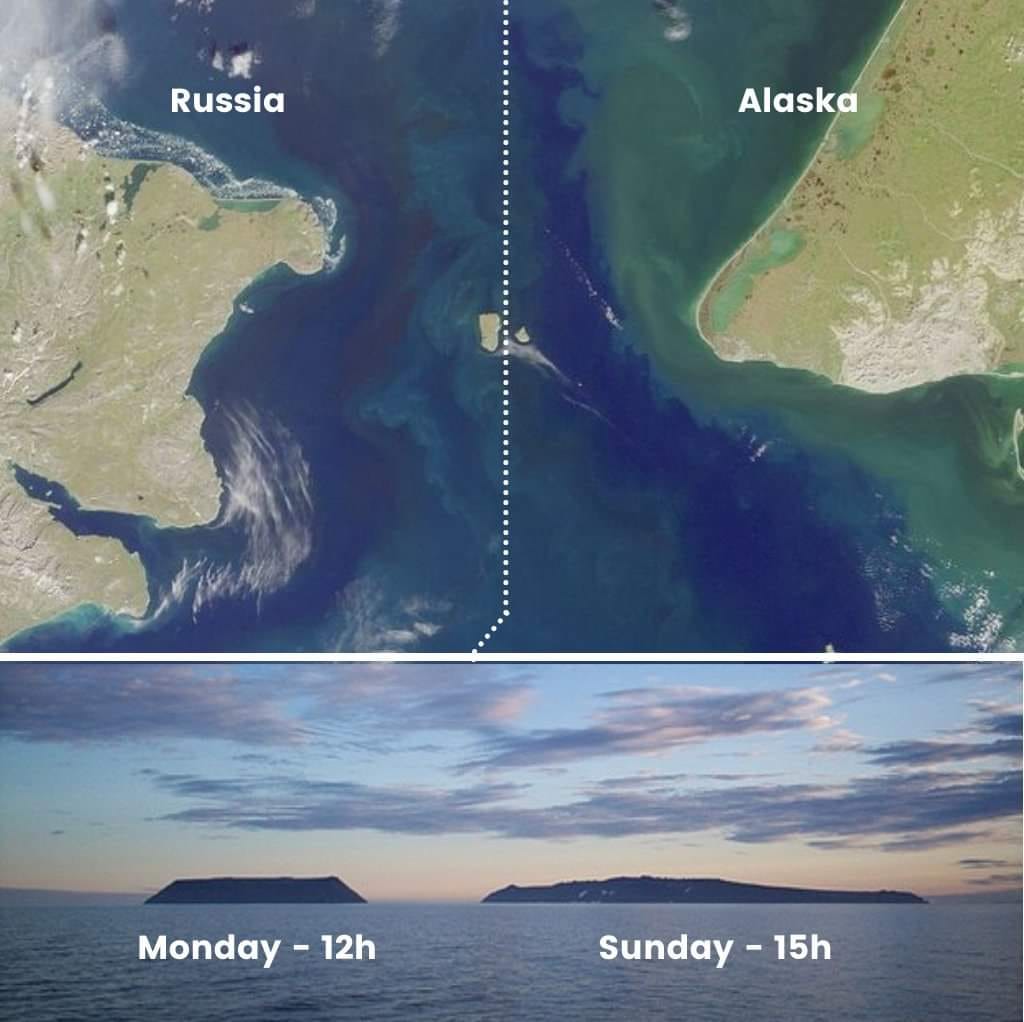
Острво сутра и Острво јуче

Острво сутра (Велики Диомед) и Острво јуче (Мали Диомед).

Диомедова острва су удаљена само 4.160 m, али веће острво је скоро један дан испред свог мањег суседа (21 сат) јер се налазе са обе стране међународне датумске линије која пролази кроз Тихи океан и означава границу између два календарска дана. Они се налазе у Беринговом мореузу између Чукотског полуострва и Аљаске.

Велики Диомед се налази на руској страни, док је Мали Диомед на америчкој страни. Ледени мост који се зими формира између два острва омогућава, иако незаконито, прелазак на кратку удаљеност између њих и „путовање кроз време“.


Tomorrow Island (Big Diomede) and Yesterday Island (Little Diomede).

The Diomede Islands are only 4,160 m apart, but the larger island is almost a day ahead of its smaller neighbour (21 hours) because they lie on either side of the International Date Line that runs through the Pacific Ocean and marks the boundary between two calendar days. They are located in the Bering Strait between the Chukchi Peninsula and Alaska.

Big Diomede is on the Russian side, while Little Diomede is on the American side. An ice bridge that forms between the two islands in winter makes it possible, albeit illegally, to cross the short distance between them and "time travel".

петак, 22. април 2022.

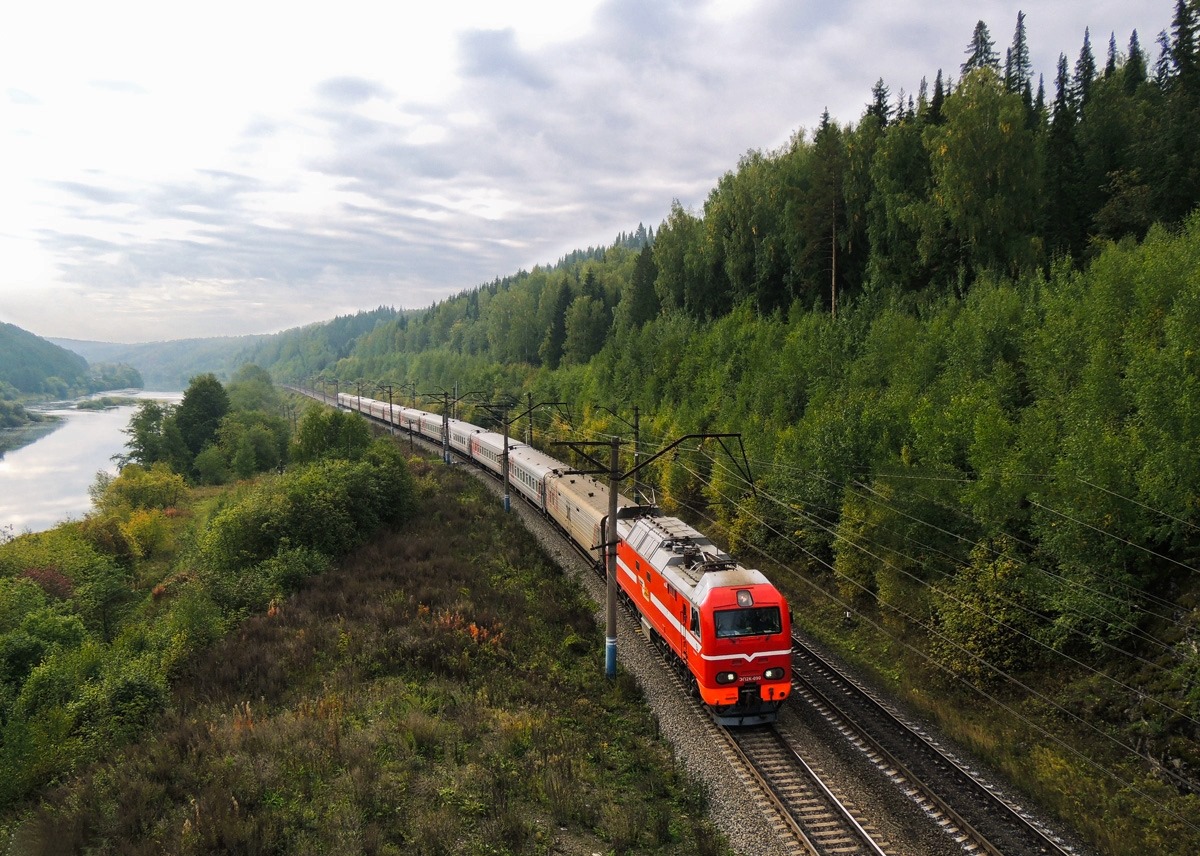
Транс сибирска железница


Salar de Uyuni, Bolivia

Salar de Uyuni is part of the Altiplano of Bolivia in South America. The Altiplano is a high plateau, which was formed during the uplift of the Andes mountains. 

The plateau includes fresh and saltwater lakes as well as salt flats and is surrounded by mountains with no drainage outlets.

The geological history of the Salar is associated with a sequential transformation between several vast lakes. 

Some 30,000 to 42,000 years ago, the area was part of a giant prehistoric lake, Lake Minchin. 

Its age was estimated from radiocarbon dating of shells from outcropping sediments and carbonate reefs and varies between reported studies. 

Lake Minchin (named after Juan B. Minchin of Oruro) later transformed into paleolake Tauca having a maximal depth of 140 meters (460 ft), and an estimated age of 13,000 to 18,000 or 14,900 to 26,100 years, depending on the source. 

The youngest prehistoric lake was Coipasa, which was radiocarbon dated to 11,500 to 13,400 years ago. 

When it dried, it left behind two modern lakes, Poopó Lake and Uru Uru Lake, and two major salt deserts, Salar de Coipasa and the larger Salar de Uyuni. 

Salar de Uyuni spreads over 10,582 square kilometres (4,086 sq mi), which is roughly 100 times the size of the Bonneville Salt Flats in the United States. 

Lake Poopó is a neighbour of the much larger Lake Titicaca. During the wet season, Titicaca overflows and discharges into Poopó, which, in turn, floods Salar De Coipasa and Salar de Uyuni.

Lacustrine mud that is interbedded with salt and saturated with brine underlies the surface of Salar de Uyuni. 

The brine is a saturated solution of sodium chloride, lithium chloride and magnesium chloride in water. 

It is covered with a solid salt crust varying in thickness between tens of centimetres and a few meters. 

The center of the Salar contains a few "islands", the remains of the tops of ancient volcanoes submerged during the era of Lake Minchin. 

They include unusual and fragile coral-like structures and deposits that often consist of fossils and algae.